
We’ve been hearing a lot lately about the risks of superintelligent AI wiping out humanity. The resignation of Jacob Coxon from Anthropic triggered a worldwide debate about the perils of models that AI companies are developing. But many people are much more concerned about the AI harms that are already here - and ballooning in front of our eyes. Some even argue that the doomsday scenarios of the ‘X-riskers’ are a deliberate distraction from the very real and actual dooms of today.
Enter the nurses. Perhaps at first glance unlikely messengers for a movement contesting AI. But nurses and health workers in the US, the UK and increasingly around the world are loudly voicing their concerns about AI - and particularly Palantir-shaped AI - in health care. The specific concerns about Palantir vary from country to country - in the UK, it’s about handing over sensitive patient data, elsewhere it is immigration enforcement or military contracts. What is consistent across all of them is the uneasy feeling that Palantir represents exactly the sort of AI company decent people should not do business with.
Palantir was co-founded by Peter Thiel in the aftermath of 9/11, as the US government began assembling the legal and technical apparatus for mass domestic surveillance. The company has been steadily building the deployment of their surveillance products since, so that they now have extraordinary ubiquity and depth, in the US and elsewhere. Their products underpin autonomous weapons technology, as used in Gaza and Lebanon, and they are at the heart of the ICE machinery. Palantir’s own user guide describes how its Enhanced Leads Identification and Targeting for Enforcement (“ELITE”) system is used for “identifying and prioritizing high-value targets through advanced analytics”. In other words, their software trawls through pooled government databases and produces ranked lists of people for immigration agents to go and arrest. The public has no way of knowing exactly what the system has been told constitutes a ‘high-value target.’
In the UK, the government is about to decide whether it will continue its huge (£330m) Palantir software contract with the NHS, allowing it access to our most personal data. Palantir won their first contract under Boris Johnson’s government, when emergency pandemic procurement rules cast aside normal competitive tendering. Palantir had been lobbying for access to NHS data for many years - and COVID gave them an opening; as the UK went into its first lockdown, Palantir offered to build a COVID data store for £1. This led to concerns about proper process, alongside bigger concerns about patient confidentiality - who can see identifiable health records and what do patients know about it? And these concerns bubble within a thicker stew of worry about Palantir’s political positioning; Thiel’s view is that the NHS makes people sick and should be privatised and has said that we Brits have Stockholm syndrome in our affection for it. More prosaically, some say that the system isn’t even very good.
Nurses and their unions have responded with open letters, petitions and protests outside hospitals and Palantir’s London offices, calling on the government to drop the contract. So how will the campaign fare? Some of our research provides some clues. Our report looking at what makes a protest movement successful identifies some key factors that, historically, have meant protest movements are more likely to achieve key goals. The table below shows the main factors, how important they are and how strong their evidence base.
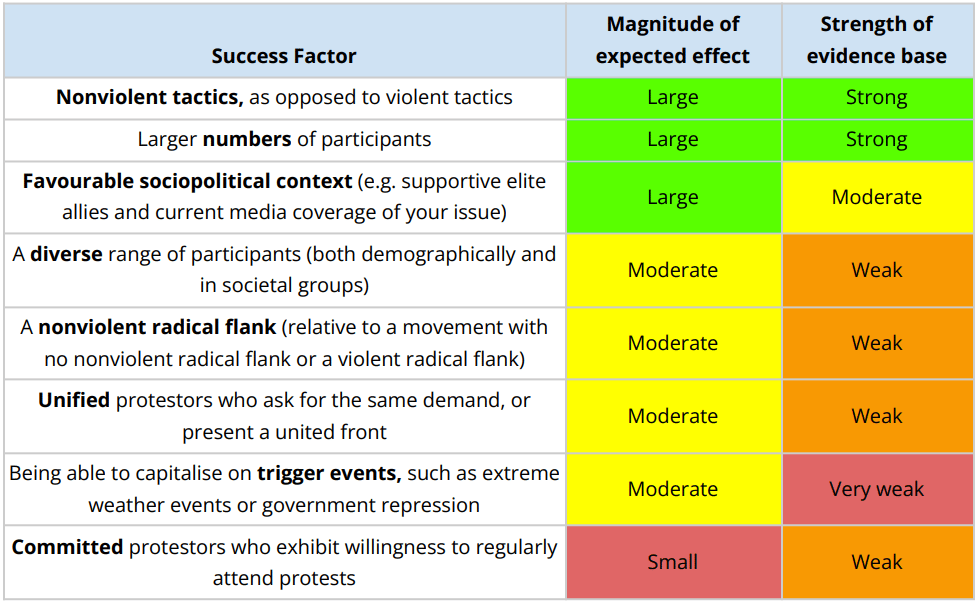
In many ways, the nurses are in a very strong position; the sociopolitical context is favourable - the government’s own Science, Innovation and Technology Committee report says that Palantir’s increasing presence in the UK public sector is an “unacceptable point of weakness” and have urged the government to exercise the 2027 break clause in the contract. Liz Kendall, Minister for Science, Innovation and Technology confirmed in June that “every aspect” of the contract is being reviewed. More broadly we know that the public is increasingly concerned about AI - only 10% think its benefits outweigh its harms and a recent UK report shows that 42% of people in the UK are limiting their use of AI specifically because of privacy concerns.
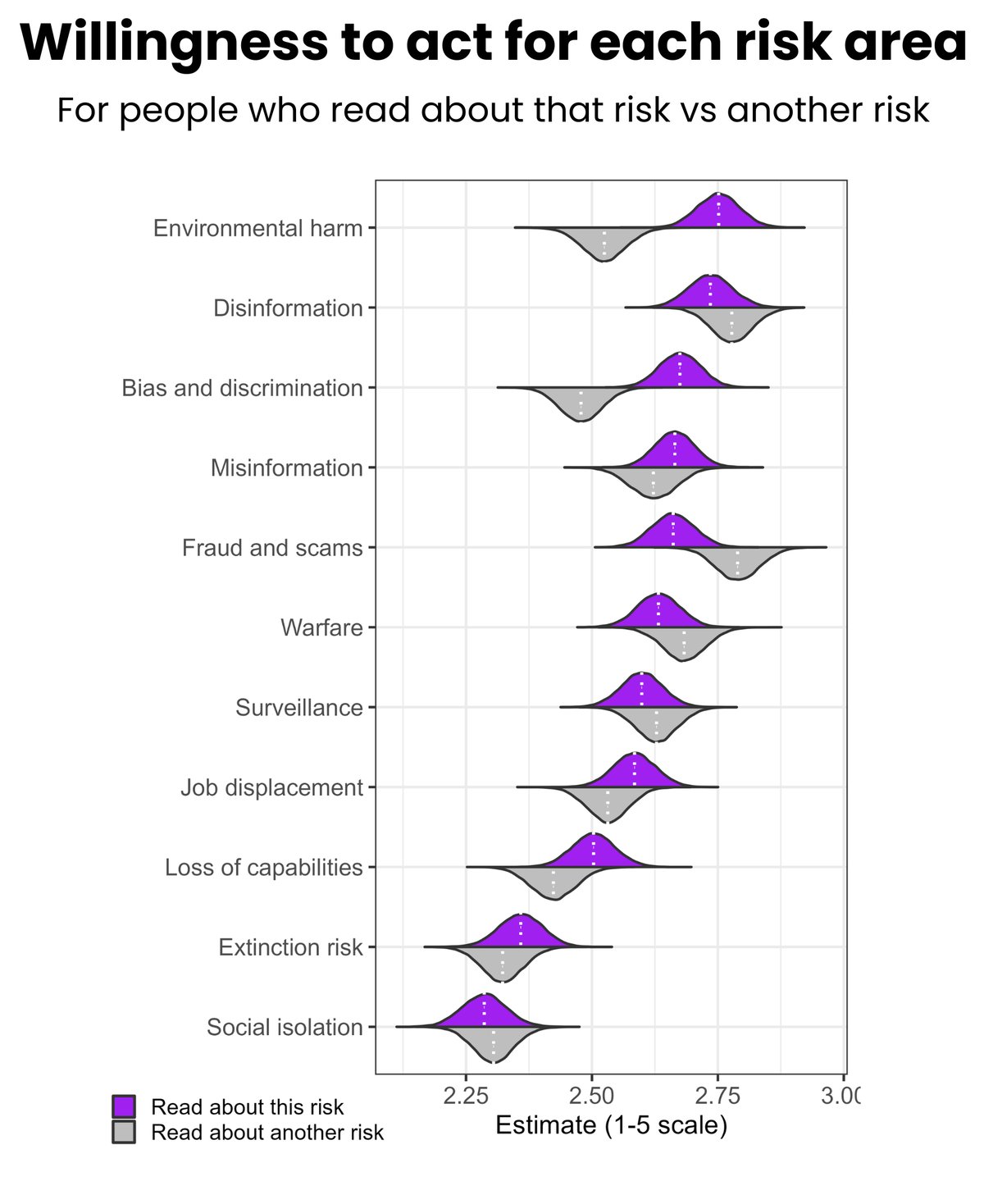
The recent highlighting of catastrophic risks from AI might be viewed as something of a trigger event, in that it has hugely raised the salience of AI risks with the general public. But these remote risks are hard for the public to feel they can act on - our recent study found that ‘extinction risk’ ranked very low in terms of people’s willingness to act (see figure below). Tangible concerns, such as the environmental harms caused by data centres, scored highest in terms of galvanising people into action. This evidence gels with what is being seen on the ground in the enormous momentum of the data centre movement. As well as being a targetable symbol for AI grievances, data centres come with immediate tangible harms of noise pollution, air pollution, and in many cases increases to local people’s energy bills. The Palantir campaign has that similar double facet - acting on a general but nebulous feeling that AI is troublesome, as well as an immediate, tangible target: keeping unhealthy AI out of our health service.
Nurses and healthcare workers are particularly trustworthy messengers; they speak with first-hand knowledge of the dangers of turning over patient care to automated decision making, especially when there is evidence of algorithmic bias in the software making those decisions. Nurses are consistently seen by the public as the most trusted profession and are not perceived as having anything to gain by protesting Palantir; the public believes they have patient safety at heart. Their campaign targets deployment of an AI system, in a specific workplace, by the workers subject to it - and all this gives the campaign real weight. A similar set of conditions applied to the successful strikes by US creatives in 2023; the Writers Guild of America and SAG-AFTRA won significant safeguards against AI-generated scripts and digital replicas of actors’ performances. And even more so than that group, nurses are a diverse group in age, gender and ethnicity; this diversity also improves the chance of success.
The current framing of the campaign - which talks not only about Palantir’s role in the NHS but also its involvement in Gaza and in ICE - also raises a question: do nurses maintain this trustworthiness as messengers when they talk about issues outside their area of expertise? Perhaps this wider framing brings more people on board, uniting them with other movements - which is good for increasing numbers - but it comes with the risk of undermining the credibility which is borne from nurses’ expertise. It also gives Palantir ammunition which they have used: Palantir UK executive vice-chair Louis Mosley has said that, while contract negotiations are normal, government decisions should not be swayed by ‘ideologically motivated campaigners’.
What might help the nurses be even more effective? Our recent study has a couple of pointers. When we looked at what moves people to act against AI, after environmental harms and data centres, the next most potent was ‘algorithmic bias and discrimination’. People are prepared to take action against the harms caused by allowing algorithms, which are biased and discriminatory, to make decisions on behalf of humans. This is very closely aligned with what Palantir’s software does in the NHS, so could be a strong message for the campaign.
In that same study, we found that the emotion most associated with a willingness to act on AI was anger; anger, much more than fear or anxiety, that helps turn people from passively concerned to actively involved, a finding backed by other research. We also found that people are more likely to act on harms that are visible now compared to longer term threats, and that they are more likely to act out of concern for those close to them than for themselves. All of these could be harnessed in the nurses’ campaign - Palantir products in our NHS risks endangering people we care about right now.
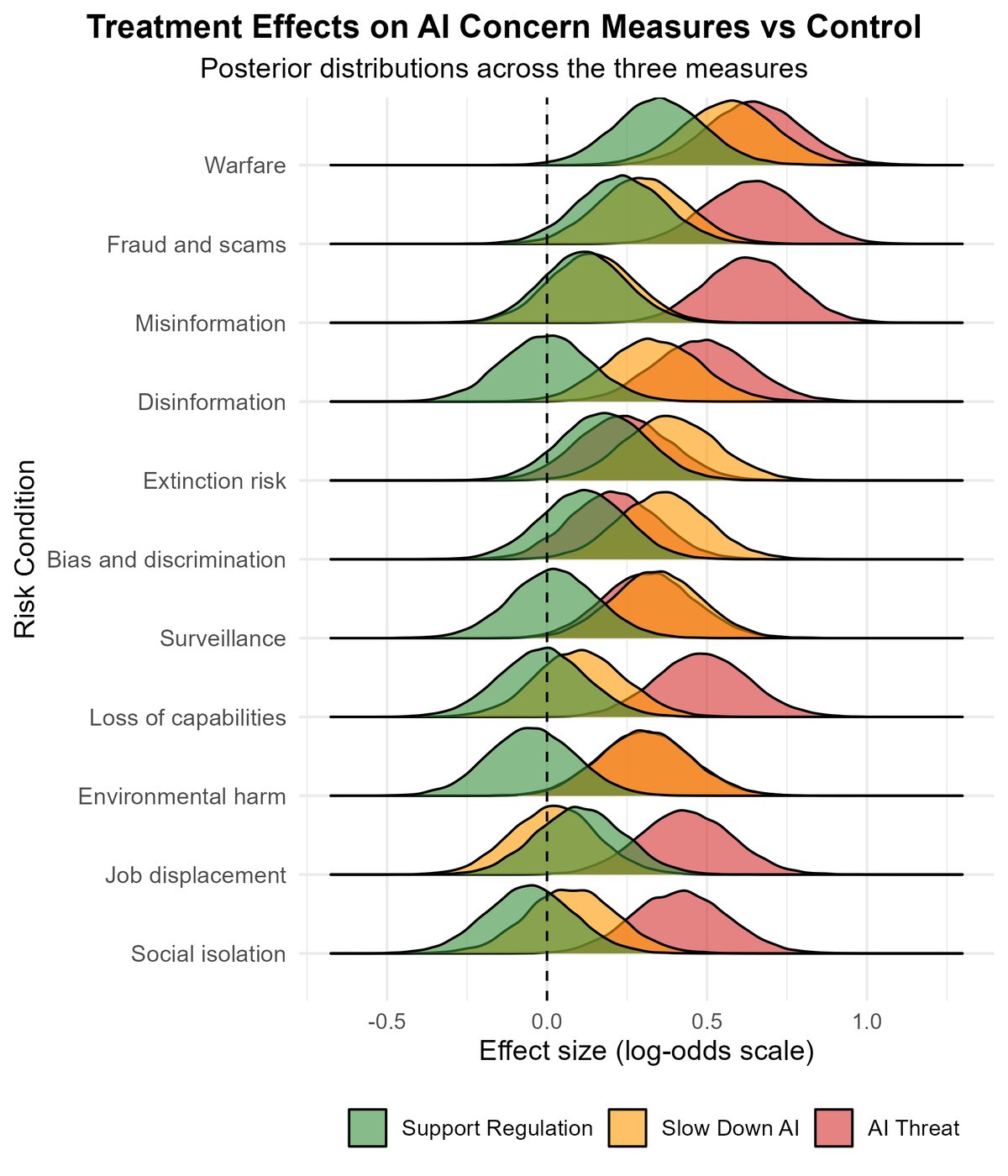
Secondarily, we found that people are extremely concerned about autonomous weapons. This question was looking at concern, which is different from willingness to act, being more passive. But autonomous warfare was the only AI harm that made people concerned on every measure we looked at, including wanting to see a slowdown of AI development and greater regulation. For most people, the idea of killer robots is truly abhorrent. So, perhaps emphasising Palantir’s broad role in autonomous weapon technology could help the nurses’ campaign - but with the caveat above, that this could be seen as them stepping outside their zone of expertise.
So will they win? On the evidence, the conditions are unusually favourable: highly trusted messengers, an immediate tangible target, a favourable sociopolitical context and a decision with a fixed date. The nurses lack mass numbers - and the research says that numbers matter a lot - but the nurses’ bet is that a small, highly credible, angry constituency can substitute for mass mobilisation.
Either way, the reason to watch is not just to do with what happens to Palantir. Few people have worked out how to contest an AI system once it’s been bought, embedded and become part of everyday practice. And the AI industry is pedalling hard on the idea that all this AI integration is inevitable. The rapid uptake of AI creates a timing problem; before it’s installed, there are only predictions of potential harms - and often not enough time to investigate and express them. By the time these harms have become realities, the system is dependent on the AI; removing it requires painful unpicking. What makes the NHS case useful is that break clause in the contract - it’s created a rare moment of reversibility. If the nurses can use it, others facing similar problems of AI systems expanding into their workplaces and lives will have a very useful model.
If you would like to support the campaign, the International day of action is on October 1st. Information is available here.
Cathy Rogers, Director of Research & Development
Social Change Lab