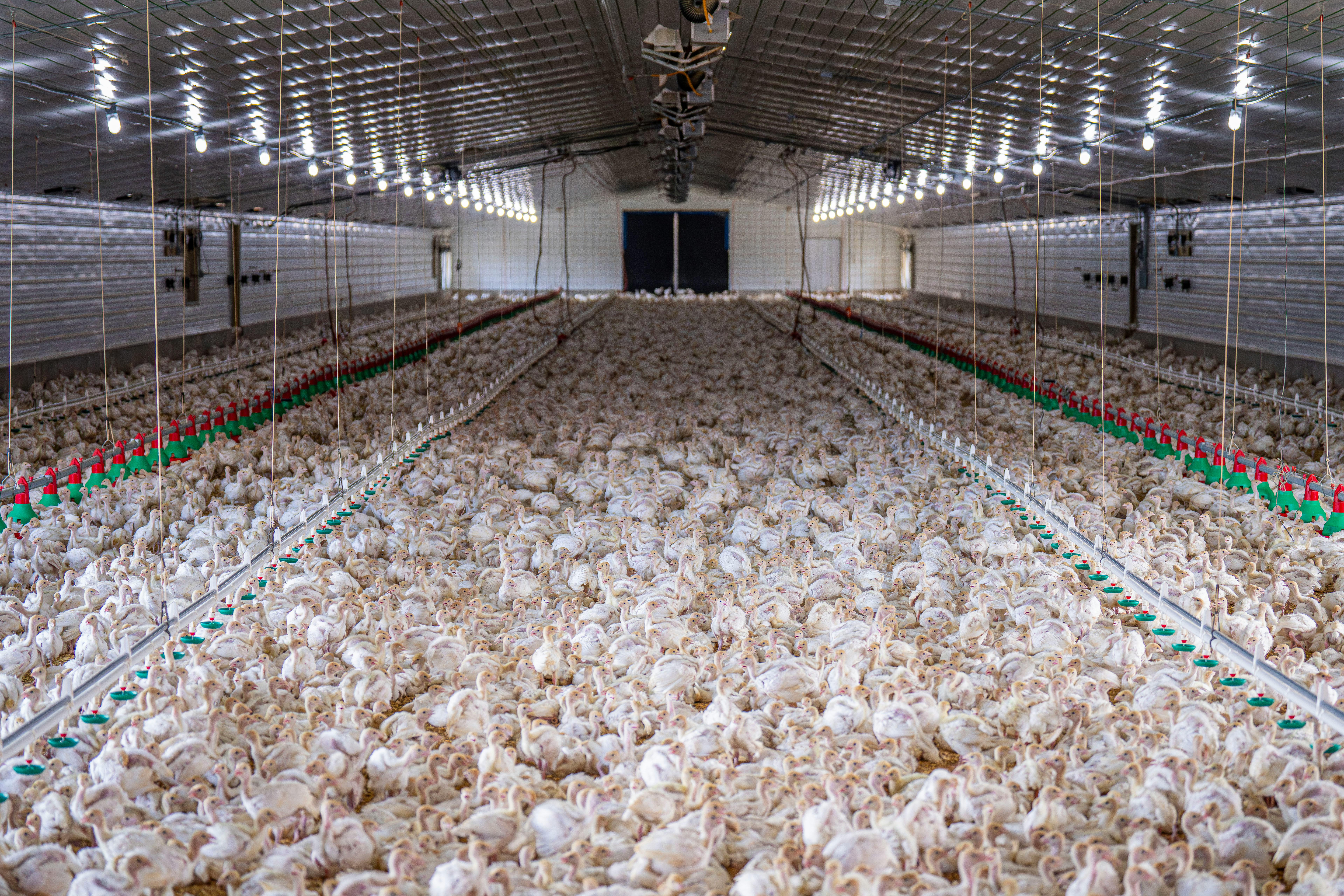
Most people oppose factory farming. Most people distrust the meat industry. And most people have no idea how widespread the worst practices actually are.
Our latest research report, conducted for Project Slingshot, surveyed nearly 4,000 people across the UK and US to understand where public opinion stands on factory farming - and where the opportunities for advocates lie. The central finding: the more people know about what's really happening, the more they want it to stop.
Here's what we found.
People oppose factory farming - across political lines
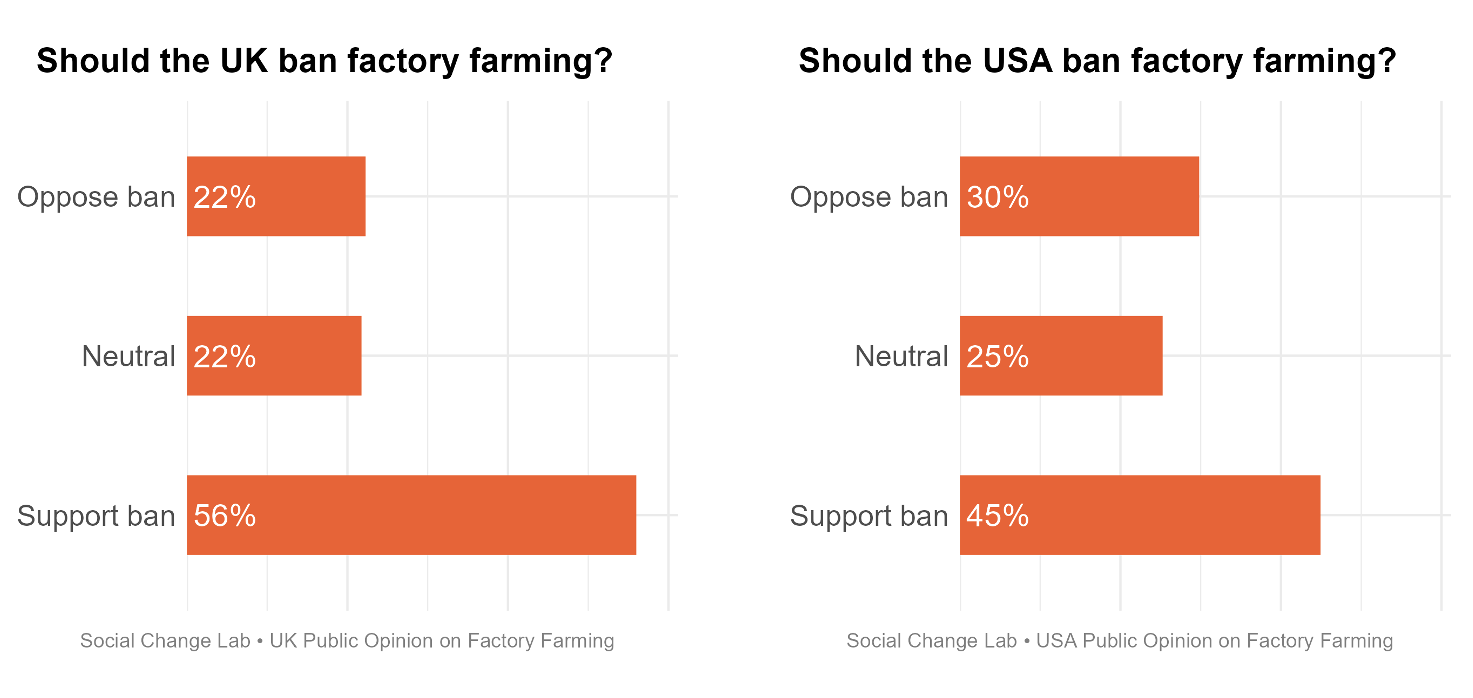
The strength of public opposition surprised even us. In the UK, 56% of respondents support an outright ban on factory farming, with just 22% opposed. In the US, 45% support a ban versus 30% opposed. At least 73% of UK respondents oppose chickens, pigs, and dairy cows being reared in factory farms.
What's striking is how widely this view is shared across demographics and political affiliations. In the UK, 76% of Green voters support a ban, and even among Reform voters, 48% agree. That kind of overlapping support across political lines is unusual on almost any issue, let alone one involving food and agriculture.
Hardly anyone trusts the industry
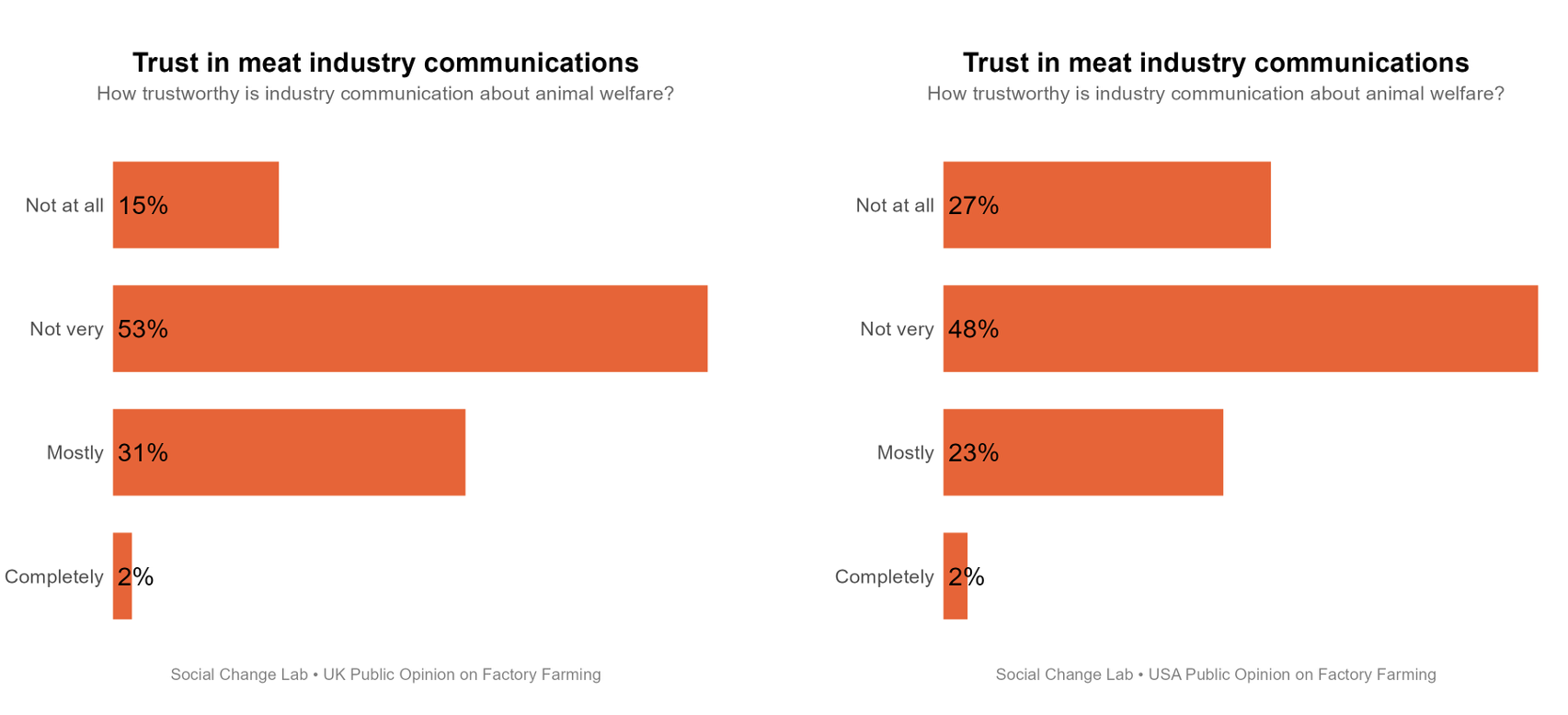
Trust in the meat industry is remarkably low. Only 5% of people think the industry takes very good care of animal welfare, and just 3% believe that product labels accurately reflect how animals are treated. Two-thirds of respondents consider industry communications about animal welfare untrustworthy.
At the same time, there's a striking lack of knowledge about who the main industry players are. In the UK, the most recognised factory farming company - Bernard Matthews - was named by only 8% of respondents. Most people couldn't name a single one. This combination of distrust and anonymity means the industry is operating largely unscrutinised, which represents a significant opportunity for campaigners.
The knowledge gap is enormous - and it matters
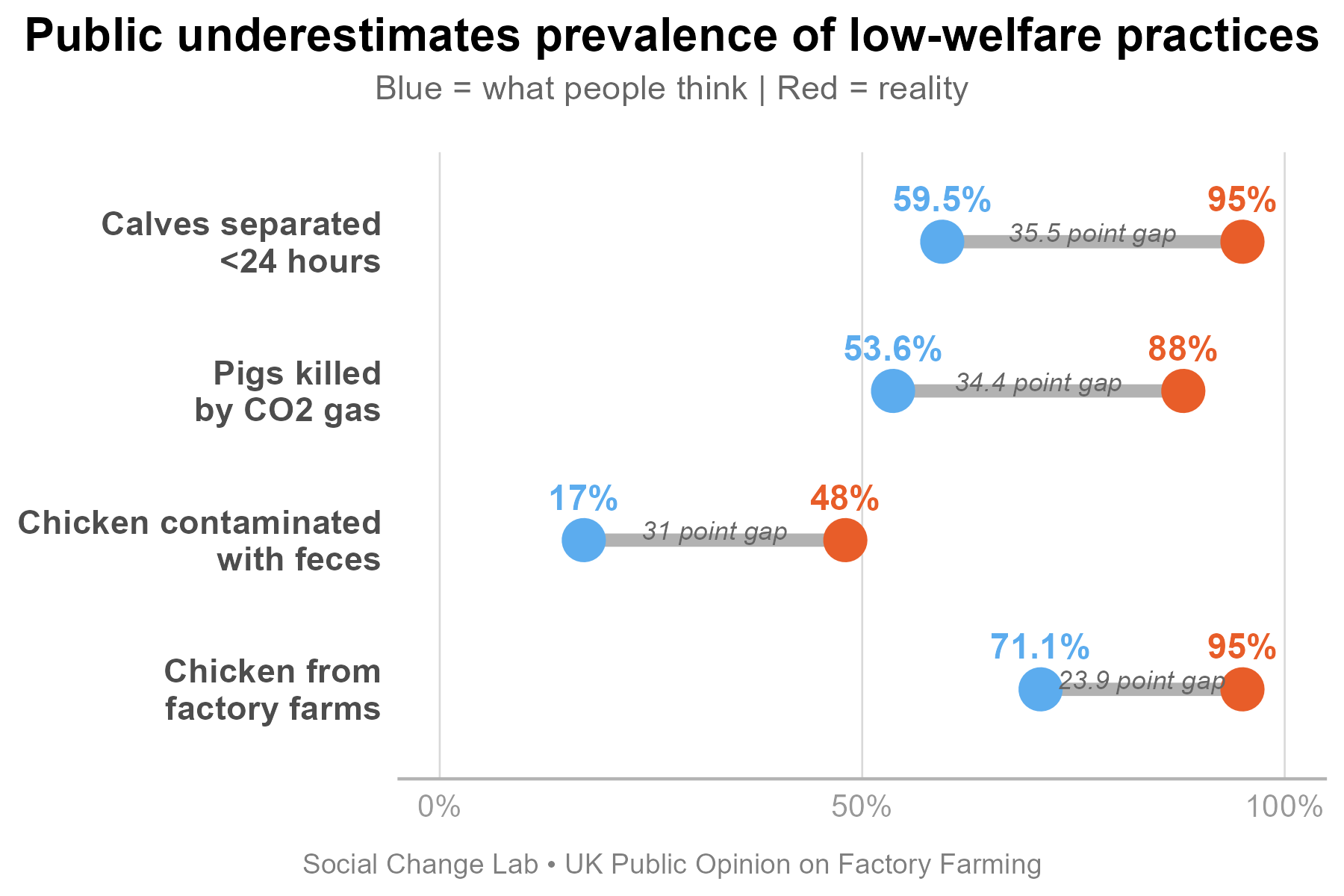
Perhaps the most important finding is the scale of public ignorance about actual farming practices. People dramatically underestimate the scale and nature of bad practices, and dramatically overestimate how much high-welfare farming exists.
For example, 95% of calves in dairy production are separated from their mothers within 24 hours of birth (based on French data, though this practice is widespread across Europe). The public underestimated the prevalence of this practice by over 35 percentage points. Similarly, 88% of pigs in England and Wales are killed using CO2 gas stunning, a practice many experts consider inhumane. The public estimated this figure at only 53.6%, a 34.4 point gap. And people thought that 71% of chicken sold in the UK comes from factory farms; the reality is 95% - a 24 point gap.
These gaps are even more pronounced in the US.
When people are presented with factual information about these practices, opposition is overwhelming. Across 12 common practices we tested - from hock burn ulcers on chickens to piglet thumping to calf separation - between 75% and 94% of UK respondents rated every single one as unacceptable.
Knowledge and support for reform are correlated
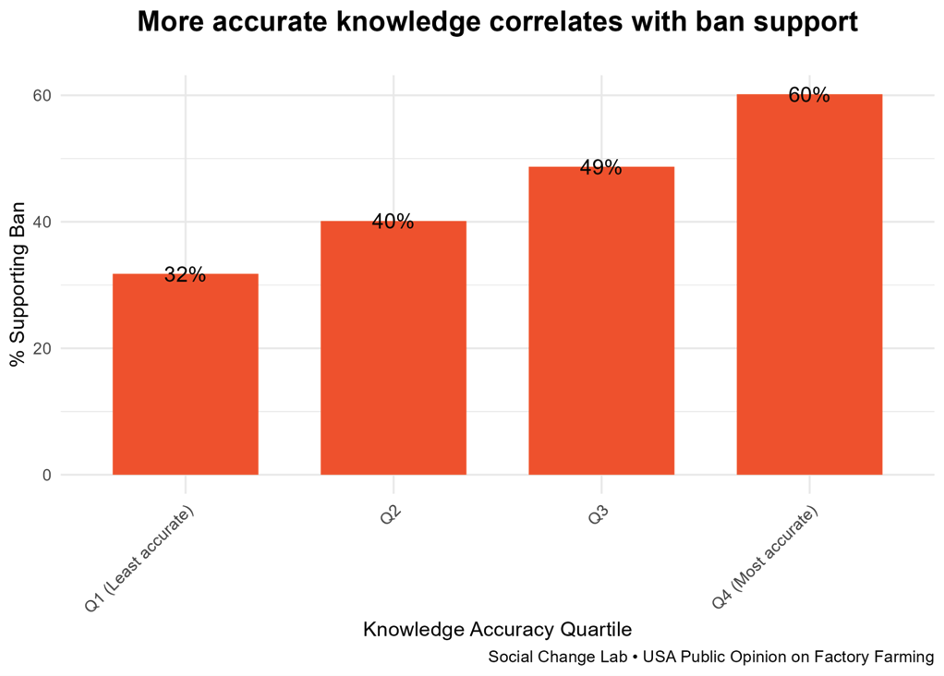
A key finding for anyone working on this issue: the more people understand actual farming practices, the more likely they are to support a factory farming ban. This correlation is statistically significant across multiple practices and is strongest for calf separation, CO2 gas stunning of pigs, and faecal contamination of chickens.
In the US data, support for a ban nearly doubles from 32% among those with the least accurate knowledge to 60% among those with the most accurate knowledge. Whilst we cannot definitively attribute this to knowledge alone, improving public understanding of current practices could strengthen support for reform. Messaging requires care, however, to avoid overwhelming audiences with distressing details.
The challenge: salience is still very low
Despite all this latent opposition, factory farming barely registers as a public priority. When asked to name the top three issues facing the country, just 1% mentioned factory farming. The economy (71%), immigration (55%), and health (46%) dominate. People care when prompted, but the issue doesn't come to mind on its own.
This is both the central challenge and the central opportunity. The public isn't indifferent - people just haven't been sufficiently confronted with reality.
Where is the leverage?
Our analysis points to three strategic directions. First, close the knowledge gap: campaigns that raise awareness while educating about the disturbing everyday realities of factory farming have real potential to shift how people engage with this issue. Second, increase urgency - find ways to make factory farming compete with other public concerns. Third, bring the 'big ag' corporations into the light. Identifying clear adversaries opens up tactical possibilities, as we've seen with fossil fuel companies. In an era of institutional distrust, these corporations could be seen as legitimate targets.
We also identified the demographic groups with the highest mobilisation potential. Health-conscious, well-educated, middle-class respondents show consistently greater opposition to factory farming, more knowledge of its practices, and higher concern about issues like antibiotic use. In the US, progressive youth are a promising target, though interestingly this was less true in the UK, where younger progressives showed lower opposition than their older counterparts.
What comes next
This research confirms something that should give the animal advocacy movement hope: public opinion is not the barrier. People already hold the values and the disgust response needed to drive change. The barrier is knowledge and salience. The task now is to design campaigns that bring the reality of factory farming to public attention in ways that are both honest and strategically effective - and to turn that awareness into political pressure and behaviour change.
Read the full report here. Detailed supplementary data, including demographic breakdowns and additional analyses, are available on request. For questions about this research or to access the complete dataset, contact us at info@socialchangelab.org.
This research was conducted for Project Slingshot, a new initiative aiming to expose the truth about factory farming and build the movement to end it.