In recent years, climate and animal rights activists have increasingly turned to provocative and disruptive tactics. Actions such as throwing soup on famous paintings or disrupting major sporting events often appear disconnected from their stated goals—what researchers call having "low action logic." Activists turn to these methods because they believe they are more likely to capture public and media attention—but are they right? Do these tactics help movements advance their goals?

We are excited to share our new report, Making a scene and making sense - How disruptiveness and logic influence media coverage and support for protests, which sheds light on the real impact of these tactics, analysing how different forms of protest influence two key outcomes:
The level of active support groups receive as a result of their actions, measured through financial donations;
Media coverage of protest actions.
For the analysis, we focussed on two UK-based activist groups, Just Stop Oil and Animal Rising. Donation data was sourced from the A22 Network, while media coverage data was collected using MediaCloud, an open source platform for media analysis. We applied Bayesian regression analysis to examine both the direct and mediated effects of disruptiveness and action logic on media attention and donations.
Key Findings
1. Protests drive donations
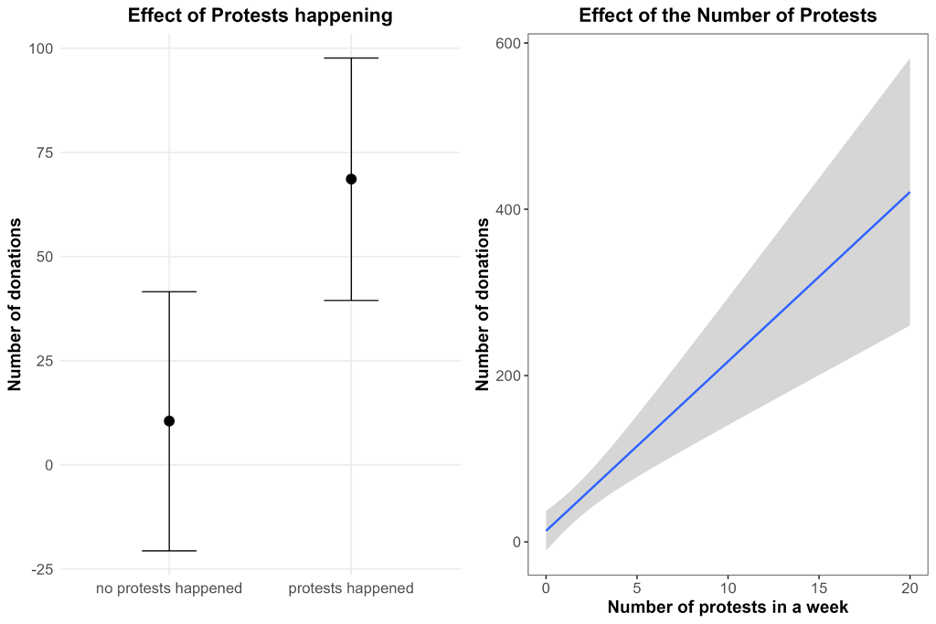
Data from Just Stop Oil and Animal Rising reveal that weeks with protests see a significant increase in donations compared to weeks without. The frequency of protests matters too—each additional protest in a given week is associated with an additional 20 donations.
2. The role of disruptiveness and action logic
The study categorises protest actions based on their disruptiveness and action logic. Results show that protests that are highly disruptive and have low action logic receive the most media coverage and, in turn, generate more donations. Specifically:
Protests that appear illogical gain more media attention than those that follow a clear rationale.
High disruptiveness leads to more donations: a one-unit increase in disruptiveness is associated with 64 additional donations.
Media coverage also drives donations—meaning protests that capture headlines tend to mobilise more active support.
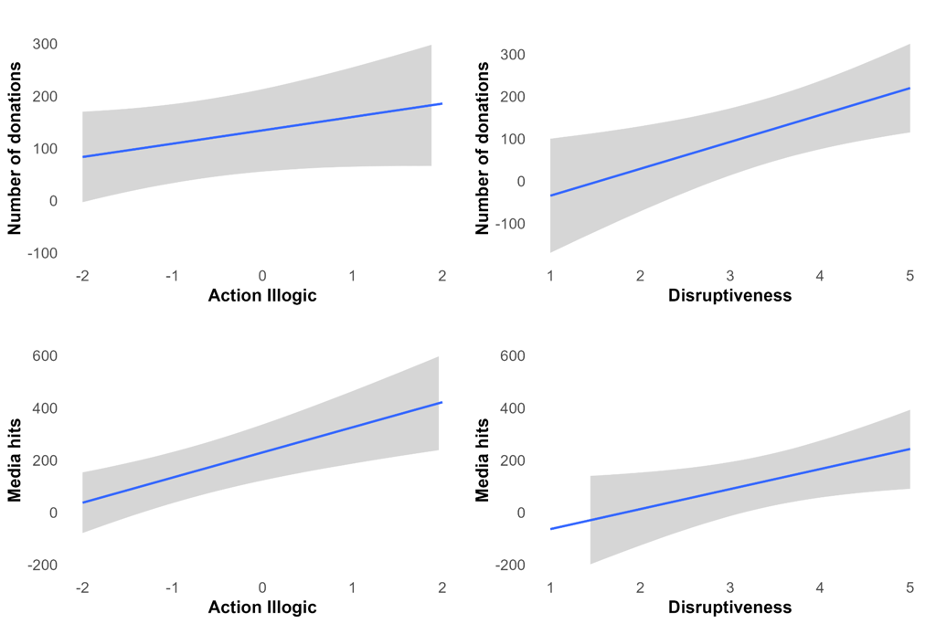
Fig. 2. Effects of action illogic and disruptiveness on donations and media hits. 3. Media attention as a mediator
The findings indicate that a key reason disruptive and illogical protests generate donations is their ability to secure media coverage. While direct effects of disruptiveness on donations exist, an increase in financial support also stems from heightened media attention. Without media coverage, the impact of these protests would very likely be smaller.
A more nuanced picture of the impact of illogical, disruptive protests
This research shows that, while disruptive, illogical protest tactics are often highly controversial and have sparked concerns over potential backlash, they also serve strategic functions, leading to greater levels of media attention and higher levels of active support for the groups carrying them out. These findings help to balance the narrative that illogical, disruptive tactics are purely detrimental to the cause of social movements.
Further research is needed to determine the extent to which these patterns generalise to other protest groups, movements, and contexts. It is also important to understand the broader effects of illogical and disruptive protests on public opinion. Evidence has shown that disruptive and provocative tactics can reduce public support—both for the activist groups themselves and for the broader cause they represent (Feinberg et al., 2020; Fuller et al., 2025). Further research in this area will help in assessing the overall balance of advantages and disadvantages of disruptive and illogical protest actions.
We hope you find this work useful. This report would not have been possible without data kindly provided by the A22 Network, or the generous support of the Climate Emergency Fund. Please do get in touch, if you would like to hear more about the research or would like us to present the key findings to your group or organisation. And a reminder that you can read the full research report here, and see all of our research projects and resources on our research page.
Image in thumbnail by AP, used under CC BY 4.0. Available here.